



Dr. Kenney’s Friday 5 Spot
On Fridays, I like to share experiences from my week—both with patients and in my personal life—that have left a meaningful impact. My hope is that these reflections offer you something of value, a bit of insight or encouragement that resonates with your own journey and inspires you in some way.
Something I believe. Loyalty is a trait I value deeply. When someone I care about is struggling, I want to encourage them, support them, offer honest counsel, and help them feel less alone. I would also hope that if our roles were reversed, they would do the same for me. True loyalty involves standing by people during difficult times, uplifting them when they are discouraged, and helping them become the best version of themselves. However, I believe there is an important distinction that is often overlooked; loyalty is not the same as unconditional approval.
Throughout my life, I have witnessed poor behavior in a variety of settings—professional environments, churches, sports teams, and elsewhere. In those situations, I have often felt compelled to offer guidance or a warning, even when it wasn’t welcomed. Once someone repeatedly chooses to ignore sound advice and continue down a harmful path, loyalty does not require me to excuse or endorse their actions. In fact, doing so would make me complicit in the very behavior I believe is wrong. Real loyalty sometimes means telling people what they need to hear rather than what they want to hear. As I teach my children, loyalty is an admirable virtue, but it should never require us to abandon our values or blindly follow behavior that is dishonest, harmful, or destructive.
An important concept. Something worth working on is becoming a better listener. Many of us fall into the habit of listening primarily to formulate our responses rather than truly understanding what is being said to us. I can be guilty of this myself and sometimes respond too quickly because I’m excited, enthusiastic, or eager to contribute. While those intentions are positive, they can still prevent me from fully hearing the other person. The reality is that some of the most important things people communicate are easy to miss if we are too focused on what we want to say next.
Over time, I’ve learned that someone can talk for several minutes, yet the most meaningful part of their message may be a handful of words, a change in tone, or a subtle shift in their demeanor. Those small clues often reveal what a person is truly feeling, needing, or trying to communicate. When we slow down and pay attention to them, our relationships improve, our understanding deepens, and our ability to help others starts to grow. I’ve noticed that when I’m fully present and listening well, conversations feel more genuine and connected. When I’m not, there is often a disconnect. Listening is one of the simplest skills we can practice, yet it remains one of the most powerful ways to show respect, build trust, and strengthen our relationships.
A good life lesson. One of my goals whenever I coach is to force our opponent to “play left-handed.” In other words, I want to find ways to disrupt what they do best and make them rely on areas where they are less comfortable or less confident. That might mean neutralizing a star player, taking away a favorite play, or disrupting a key strategy. At the same time, I want our own team to be prepared for the same challenge by developing strengths beyond our primary ones. The best teams aren’t just good when everything goes according to plan because they can adapt when they don’t. That’s a lesson that extends far beyond sports.
At some point in life, the things that have always worked best for us may stop doing so. A career path may change, an injury may alter our abilities, a relationship may shift, or circumstances may force us out of our comfort zone. When that happens, we have a choice. We can become discouraged and cling to what used to work, or we can adapt and find a new path forward. Growth often requires learning new skills, gaining new knowledge, and developing strengths we never thought we’d need. Just like in football, life will eventually force all of us to “play left-handed” at times. The people who continue to succeed are usually the ones willing to adjust, stay resilient, and discover new ways forward.
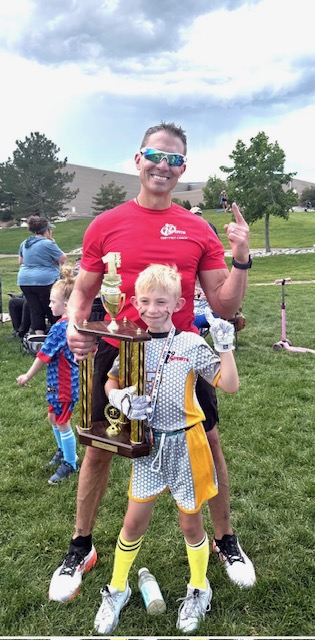
A philosophy I embrace. I wrapped up my spring football season on Saturday, and after our team won the championship, I shared one of my favorite quotes from Bill Parcells with the players: “The players deserve a chance to win. And you as the head coach have an obligatory responsibility to give it to them.” That quote has always resonated with me because it captures what leadership is truly about. Whether in sports, business, or life, leadership is not about titles or recognition, it’s about responsibility. The people who trust us, rely on us, and follow our example deserve our best effort. As a coach, I have always taken that obligation seriously and tried to give my players every opportunity to succeed.
The older I get, the more I realize this philosophy applies to far more important roles than football. As a father, husband, doctor, man of faith, and friend, there are people who depend on me and observe how I carry myself. My goal is not perfection, because I fall short plenty of times. Instead, it is to consistently strive toward a standard that benefits those around me and demonstrates behavior worth repeating. When we recognize that our choices affect more than just ourselves, it gives greater meaning to the way we live each day. I have been blessed with incredible people in my life, and one of the best ways I can honor them is by continually working to become the best version of myself for their sake and my own.
Some quotes I Love.
“A smooth sea never made a skilled sailor.” – Franklin D. Roosevelt
“True loyalty is proven, not proclaimed.” – Craig Groeschel